
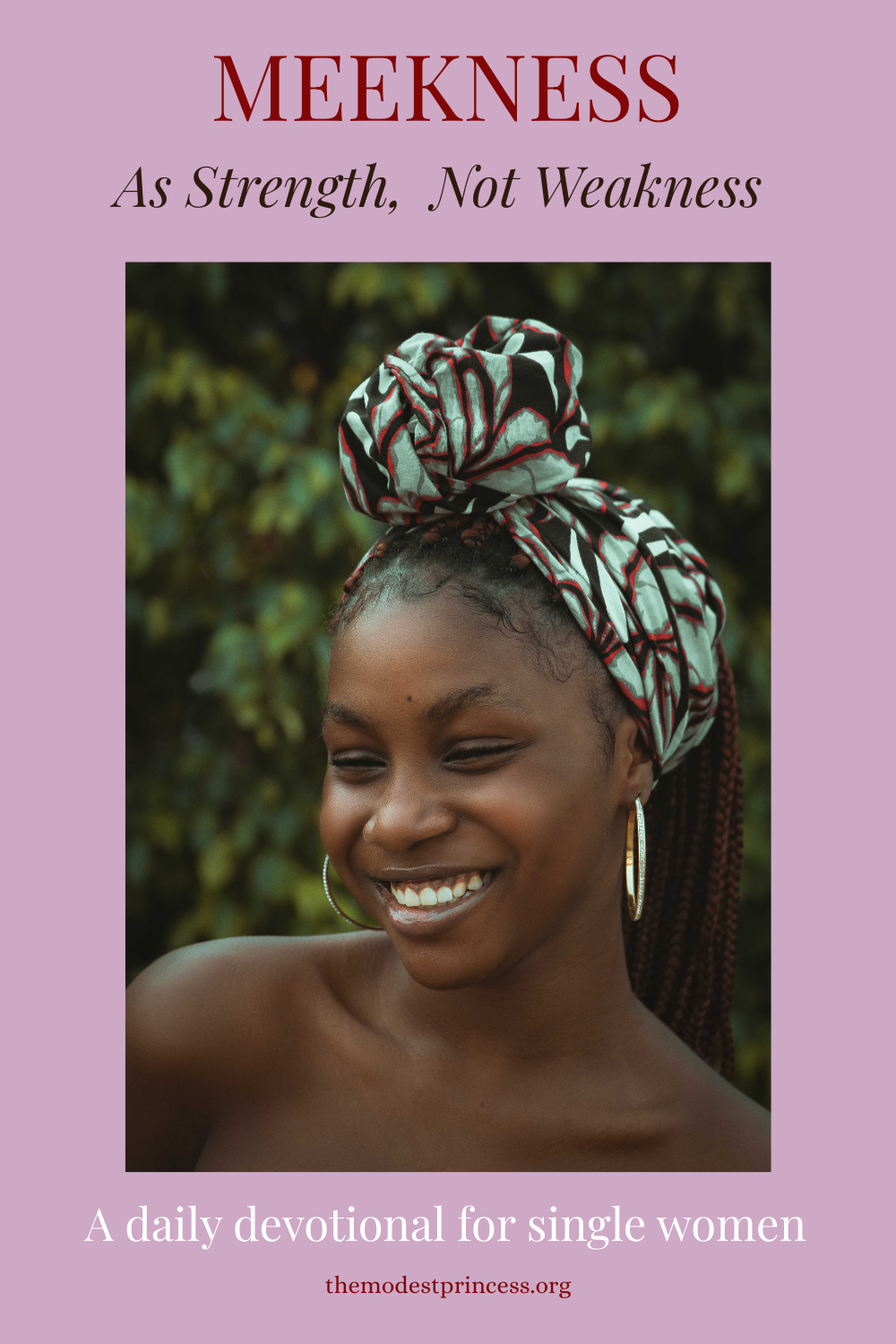
When many people hear the word “meek,” they picture someone timid, shy, or unable to stand up for themselves.
In today’s culture—where boldness, “standing on business,” are celebrated meekness is often mistaken for weakness. But Scripture paints a completely different picture.
Meekness isn’t weakness.
It isn’t passivity.
It isn’t being a doormat.
Meekness is strength under control—a sign of discipline, humility, and deep trust in TMH.
Defining Meekness
Biblically, meekness reflects gentle strength.
The Greek word often translated as “meek” is praus, which refers to mildness of disposition, gentleness of spirit, and humility.
None of that is weakness. It’s power that’s guided by wisdom.
Meekness doesn’t mean you lack courage or opinion. It means you know when and how to exercise strength in a way that honors TMH.
Meekness as Inner Strength
Meekness shows up as self-control, patience, and humility.
- When someone offends you, it’s easy to snap back.
- When life feels unfair, it’s natural to lash out or complain.
But meekness chooses restraint. It says, “I trust TMH to handle this I don’t have to fight every battle with my flesh.”
Meekness allows us to stand firm without being harsh or bitter. It’s the kind of strength that stays calm in conflict and patient in waiting, trusting that YHWH is in control.
Biblical Examples of Meekness
Yeshua is the perfect picture of meekness.
He had all authority in Heaven and Earth, yet He chose humility, servanthood, and gentleness. And there was nothing weak about Him. He was also described as austere—a man of conviction and strength.
Here are two examples of meek women in Scripture:
Ruth:
She displayed meekness by humbly gleaning in the fields to provide for herself and Naomi. She didn’t demand to be covered or treated special. Her faithfulness and humility were rewarded with a righteous husband and a legacy in the line of Yeshua.
Esther:
Even as queen, Esther didn’t rely on her title. She fasted and prayed before approaching the king to save her people. Her courage was wrapped in humility and wisdom.
Why Meekness Matters Today
Meekness is essential in every area of life:
- In relationships: It helps us handle conflict without lashing out or tearing down.
- In leadership: It builds trust, showing that we’re approachable and mindful—not prideful.
- Spiritually: Meekness keeps our hearts soft and teachable, ready to receive correction and grow in faith.
A meek spirit keeps us from thinking too highly of ourselves—and keeps us aligned with TMH.
Cultivating Meekness in Daily Life
Meekness isn’t something we achieve on our own. It’s a fruit of the Spirit—it grows as we walk with TMH.
Practical ways to develop meekness:
- Pray for guidance: Ask TMH to help you respond in humility and gentleness.
- Hold your tongue: Pause before speaking, especially in frustration.
- Listen before reacting: James 1:19 reminds us to be “swift to hear, slow to speak, slow to wrath.”
- Stay teachable: Be willing to learn from correction, life lessons, and others’ wisdom.
Small, daily choices create a lifestyle of meekness.
“Ready to grow in the Fruits of the Spirit? Download the Flourish Bible Study today.” 🍓📖
Final Encouragement
Meekness is not weakness.
It’s the strength of a woman who knows who she is in Yeshua—and doesn’t have to prove herself to the world.
True strength is quiet.
It’s humble.
It’s steady.
Yeshua walked in meekness and changed the world.
Let’s follow His example and let our gentle, Spirit-led hearts reflect His power and love.